Insights > Ideas at Play: How Adults Can Design for Children
Ideas at Play: How Adults Can Design for Children
“A city friendly to children is a city friendly to all,” says Mara Mintzer, executive director and co-founder of Growing Up Boulder, a nonprofit aimed at involving children in the urban design process. If you design cities for kids, you will make a wonderful, walkable, equitable, and accessible world.
“Kids think differently from adults, and that’s a good thing,” Mara said in a 2017 TEDxMileHigh talk (a talk that has had over two million views!). “Adults think about constraints: how much time will a project take, how much money will it cost, and how dangerous will it be? It’s not that these constraints aren’t real, but if we kill of these ideas from the beginning, it limits our creativity and dampens the design process. Kids, on the other hand, think about possibilities.”
Through Growing Up Boulder, Mara and her colleagues have developed methods and tools for working directly with children to envision child-friendly spaces. The result? Kids’ voices are documented in ways that let them interface with policy makers. Now the dreams of children and youth are part of the planning process in the City of Boulder.
Recently, several of the Caddis Collaborative team members had the opportunity to take a workshop led jointly by Mara and James Rojas, co-author (with John Kamp) of Dream Play Build: Hands-On Community Engagement for Enduring Spaces and Places. James is an urban planner, community activist, educator, and artist who runs the planning, model-building, and community-outreach practice called Place It! Through Place It!, he has developed an interdisciplinary, community-healing, visioning, and outreach process that uses the idea of play to generate new design.
James recognizes that academics, planners, and professionals (such as architects!) have siloed themselves away from humanity. He also understands that there is a genius that lies in people – adults and children. But to access that genius, James believes, people need to move out of their normal world and into a play world.
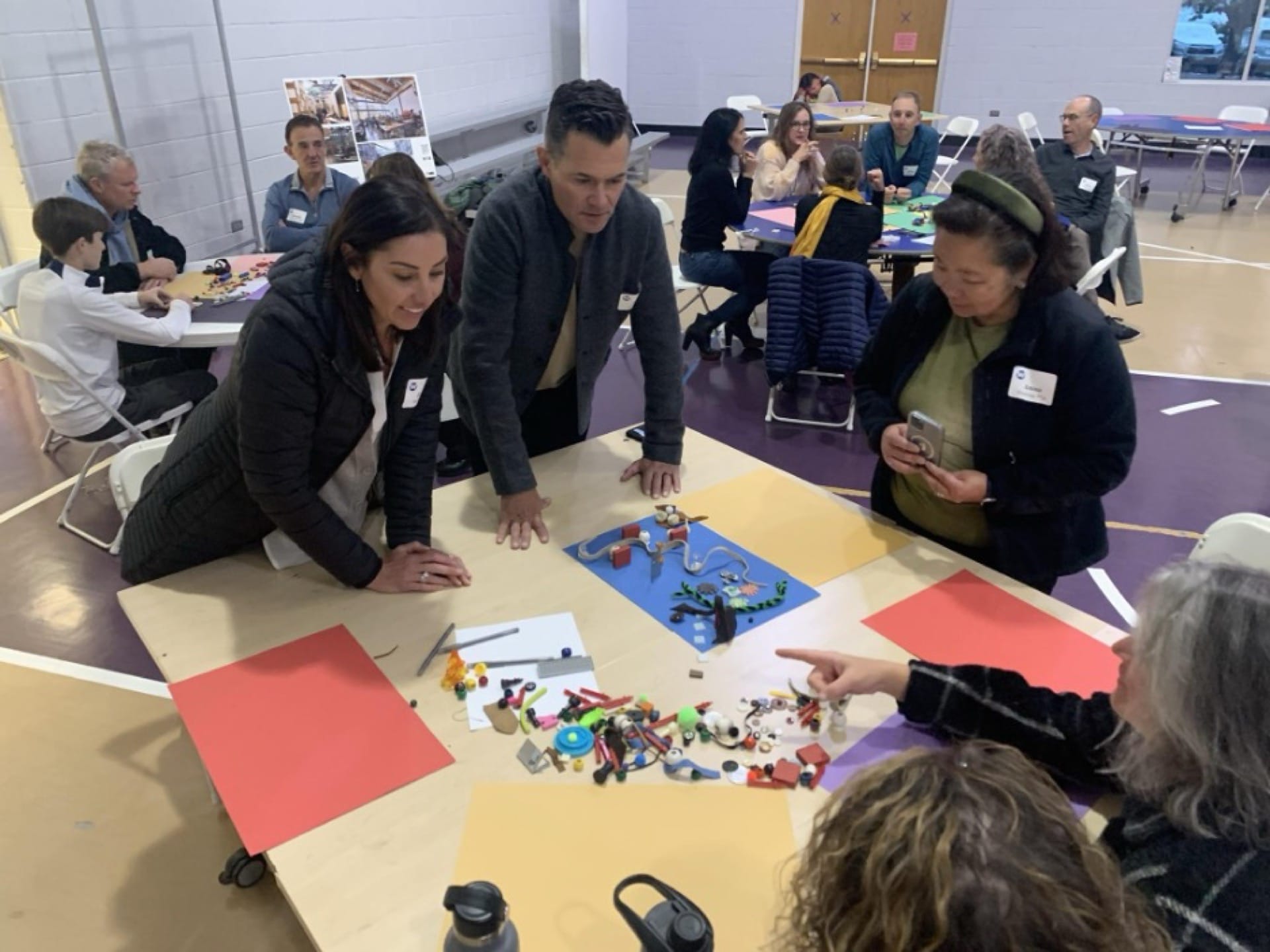
In James’s workshops, participants are given sheets of colored paper and asked to think of their favorite childhood memory related to school. Participants then build and present those memories and end up sharing their ideas from a place of love, rather than a place of professional ego. Then James works with participants to apply their ideas to design parks and public spaces. Participants begin to tap into a place of sweetness in themselves and start to see the people at the table with them through a more loving and connected lens. Together they have the opportunity to get out of the part of their brains where everyone wants to be right.
James’s goal is to get participants into the part of their brain that is expressing experiential beauty. Play, imagination, dreams are all integral to James’s method. The act of play and physical forms of communication break participants out of the usual rational, analytic, defensive, logical mind and into a more creative and expressive way of relating to the topic and each other.
In their workshop, Mara and James showed that what works beautifully with children also works beautifully with adults who are designing for children. The Caddis team found the workshop stimulating and invigorating. At Caddis, we want to evolve and learn. But we found that even as we were students, Mara and James learned from us, too. It was a time of joyful co-creation!
Caddis Collaborative has had many opportunities over the years to design stimulating and enriching places for children and youth. Here are a few of our kid-friendly projects, followed by the methods we use and the design principles we incorporate.
Caddis-designed schools
- Hillside School: Caddis is designing a new school for Hillside, a facility that works with students who have dyslexia and other learning differences. Caddis met with parents, teachers, administrators, board members – and kids.
- Thorne Nature Preschool: This program from Thorne Nature is currently under construction. Caddis led the design of the new preschool building.
- Watershed School: Caddis is designing a new building for Watershed School, an experiential learning school for students in grades 6 through 12. We conducted workshops with the students to learn about their needs and desires.
- Jarrow Montessori: Stephen Eckert lead a design-build installation for a new entry feature and Caddis provided design work for remodels and additions, city entitlement amendments, and master planning to pave the way for future growth and expansion.
Caddis-designed housing
- Boulder Housing Partners: When we were designing Project Renovate, we led afterschool workshops with kids just as we had with adults who would be living there. We engaged the kids in play-like exercises where they moved wood blocks and colorful baubles around on a site plan to explore options. The kids said they wanted a pony and a swimming pool. We couldn’t give them those things, but we did give them the futsal courts and the play structures they wanted.
- Cohousing projects: We’ve designed many cohousing projects and have found that there are great ways to make the common spaces friendly to and supportive of kids. These strategies include designing “travel loops,” providing spaces to play and explore right outside their individual homes, and creating places that allow kids to be together under their own autonomy.
- Ponderosa: Working with Trestle Strategy Group and the City of Boulder, current residents of the Ponderosa Mobile Home Park played an active and critical role in establishing a plan for redevelopment. Our team worked with Growing Up Boulder to engage with the children of the community.
Methods for engaging kids
At Caddis, we believe strongly that architects and other design professionals should ask those they are designing for what they want. This includes children and youth. A reflection of the success of our design practice is that listening to those who will learn in or live in the spaces we design changes our outcomes. We ask people (including kids) what they want, and we take the risk of being open to their ideas. As a result, we design buildings that reflect their needs.
Here are a few strategies we have found helpful:
- Ask kids what they want in the space that is being designed. Engage them in activities to draw out their ideas.
- Children and youth work with imaginative possibilities and, as Mara points out, are not focused on constraints.
- When kids dream up a space, they always include fun, play, and movement, which is what they need for health (as do adults!).
- When we engage kids in the design process, it helps us raise kids who think the world is possible, that they can have a role, that their input is meaningful, and that they are respected.
Kid-friendly design
Taking kids’ input into account, we incorporate the following design principles.
- Understand children’s basic needs. Children should have:
- Access to the outdoors without constant/perceivable parent oversight or interaction, right outside their door
- Easy access to other kids
- Common spaces designed to be their territory
- Ability to grow their range as their capabilities increase
- Safety
- Incorporate the principles of sensory-based design. Give children the ability to create and adapt to their environment.
- Design for movement, scale, and visual connection.
- Rethink playscapes:
- Nature, not plastic: trees, boulders, sand, and water
- Hard surfaces where balls can bounce and wheels can roll
- Weaving loops
- Toy storage, parking lots (but avoid conflict with adults)
- Loose materials they can manipulate
- Across-age play (e.g., climbing walls, porch swings)
- Rolling hills and landforms
- Gross motor
- Quiet play
- Safe and defensible space
- Comfortable at all times of year and day and in any weather
- Include spaces for activities beyond play: dining, walking, hanging around, exploring.
The ”Watershed as Play” workshop invited Watershed School parents and faculty to engage imaginatively.
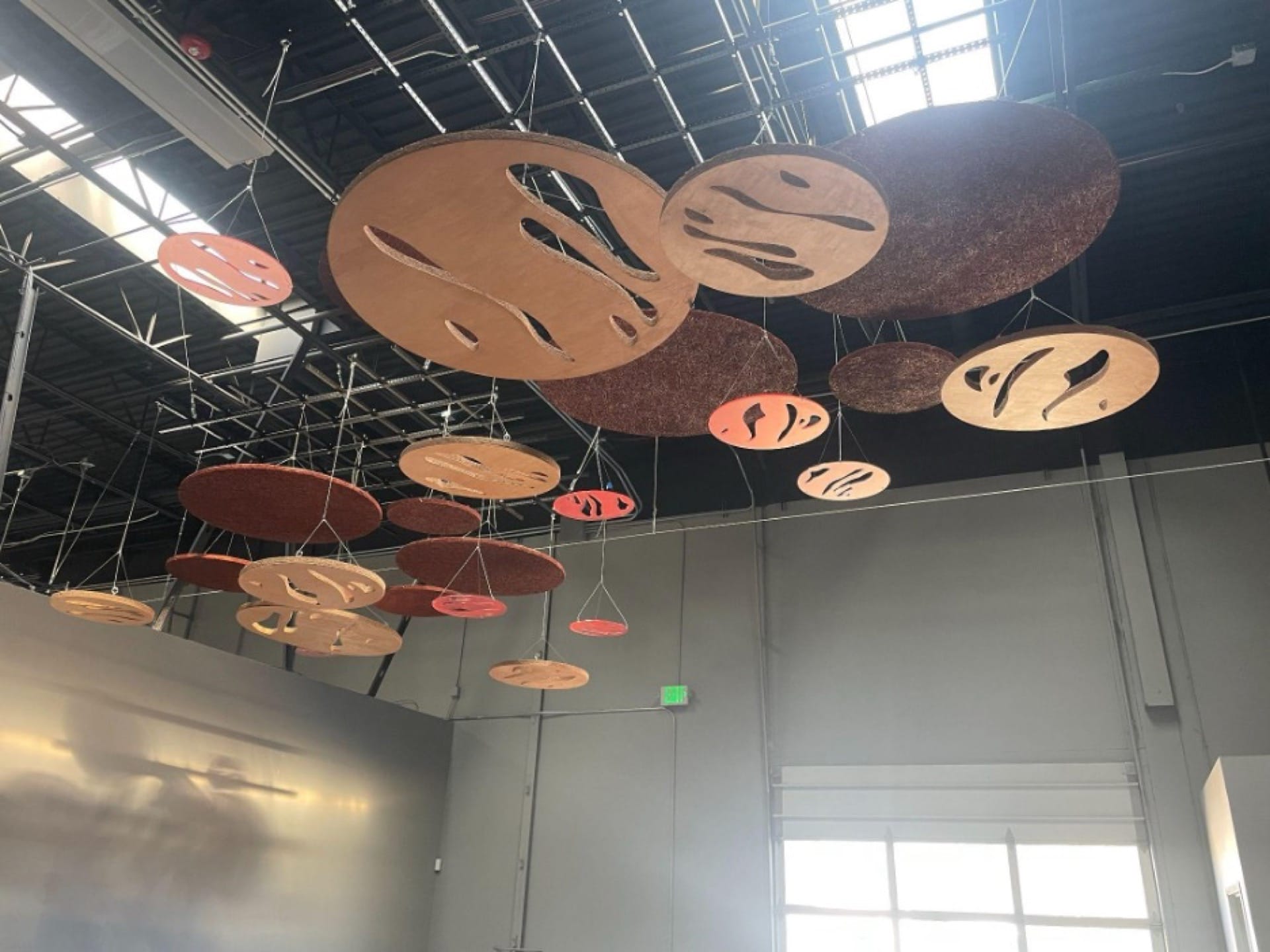
This design-build installation resulted from a participatory creative process between University of Colorado Boulder Environmental Design students and Watershed students, led by Caddis.
For more on designing for children, check out the following fantastic resources:
- Shaping Urbanization for Children: A Handbook on Child-Responsive Urban Planning (UNICEF)
- “Principles of Child-Friendly Housing” (City of Portland, Oregon, Bureau of Planning)
- “A Memo about Raising Children in Cohousing” (Katie McCamant, CoHousing Solutions)
- “How to Explain Natural Playgrounds to Anyone” (Bienenstock’s Natural Playgrounds)
- Creating Better Cities with Children and Youth: A Manual for Participation (David Driskell)
- “Placemaking with Child and Youth: Participatory Practices for Planning Sustainable Communities” (Mara Mintzer and Growing Up Boulder collaborators, Professors Tori Derr and Louise Chawla)
To learn more about human-centered design in general and for other populations, check out our other posts in this series:
- “Human-Centered Design: How to Make the Built Environment Work for Everyone”
- “Neuroscience and Architecture: What Science Teaches Us about Designing Buildings for Mental Health and Well-Being”
- “Designing for Adults with Intellectual and Developmental Disabilities”
- “Trauma-Informed Design: Inclusive Buildings for All”
Other Relevant Insights







We’re proud to be in good company.
We love being part of the community that’s bringing good design to good people. That’s why we contribute to and participate in these organizations – so we can bring the best emerging ideas to you.
Get In Touch
Let us bring your vision to life.
A beautiful space that fits your best life. A sustainable build. A fun and easy design process. We’re with you every step of the way – from the beginning dream to the finished project!
